Dozens of Chinese companies in recent years have developed software that can use artificial intelligence to sort and analyze the data they collect, as the Chinese government seeks to improve its ability to monitor the population unabated.
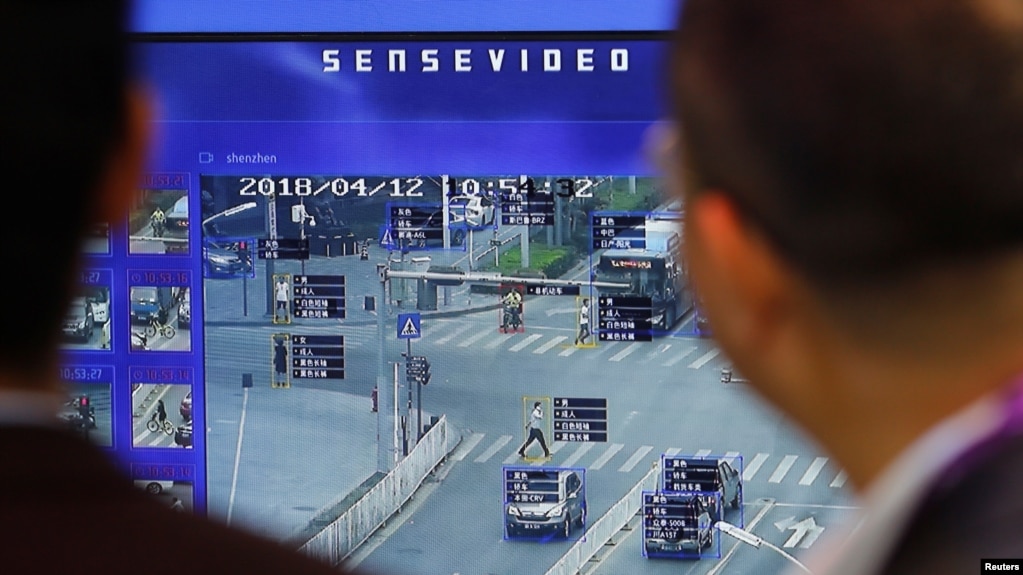
A Reuters study of more than 50 publicly available documents found that over the past four years, dozens of units in China had purchased the software, known as "one person, one file". Previously, such software could only collect data, but sorting or analyzing the data had to be done manually. The "one person, one file" software upgrades the previous software, and can automatically classify and analyze the collected data through artificial intelligence.
“The system has the ability to learn independently, and as the data increases, the accuracy of the profile creation can be optimized. Partially occluded, masks and glasses (faces) and low-resolution portraits can be relatively accurate archives,” Reuters said, citing a tender published in July by the Public Security Bureau of Henan Province, China’s third most populous province.
Reuters contacted the Henan Provincial Public Security Bureau for comment on the system and its access, but received no response.
The newly developed "one person, one file" software greatly improves the surveillance system currently used by the Chinese government. Although the systems currently in use are capable of collecting personal data, the classification and processing of the data must be done by law enforcement or other users.
Jeffrey Ding, a postdoctoral researcher at Stanford University's Center for International Security and Cooperation, told Reuters that another limitation of existing surveillance software is the inability to instantly link a person's profile with the person's actual location unless the person happens to be there. At security checkpoints such as airports.
Mareike Ohlberg, a senior researcher at the Berlin-based German Marshall Foundation, points out that one-person-one-file software “is a sort of information technology that makes it easier to track individuals.”
The Reuters report said China's Ministry of Public Security did not respond to a request for comment from the agency on the one-person-one-file software and its surveillance use. Tenders for the software were not only sent to local public security bureaus, but also 10 political and legal organs of the CCP in various regions received and opened tenders. But the Central Political and Legal Affairs Commission did not respond to a Reuters request for comment.
Reuters quoted three technical experts as saying that the tenders reviewed by the agency's reporters were only a small part of efforts by Chinese police and political and legal authorities to use big data and artificial intelligence to upgrade surveillance networks. According to documents reviewed, some users of the one-person-one-file software, such as schools, want to use the software to monitor unfamiliar faces outside the campus.
The vast majority of users, such as the police in Aba Tibetan and Qiang Autonomous Prefecture in Sichuan Province, purchased the software entirely for stability maintenance purposes. Aba's tender described the use of the software as "maintaining political security, social stability and people's harmony."
The Aba State Public Security Bureau also did not respond to a Reuters request for comment.
Beijing insists its surveillance network is critical to fighting crime and preventing the spread of the coronavirus; but human rights groups like Human Rights Watch argue that China's transformation into a surveillance state violates people's privacy and unfairly targets people such as Uighurs. Specific ethnic groups such as Muslims are targeted.
According to documents reviewed by Reuters, local governments across the country, including districts in Beijing with a very high population density and less developed provinces like Gansu, have at least 100 percent of the population in the four years since they first applied for a patent for one-person-one-file software. For the procurement of this software, 50 bids will be opened, of which 32 will be opened in 2021. The software is now available from 22 companies including SenseTime, Huawei, Megvii, Yuncong, Dahua and Baidu's cloud division.
SenseTime declined to comment, while the units of Megvii, Yuncong Technology, Dahua and Baidu Cloud did not respond to Reuters' requests for comment.
Huawei, for its part, said in a statement that a partner developed one-person-one-file software for its smart city platform, but would not comment on the use of its patents.
"Huawei does not develop or sell apps targeting any ethnic group," Huawei said.
Documents reviewed by Reuters show that 22 of China's 31 provinces, municipalities and autonomous regions have opened bids or purchased software for one person, one file, and the involved units range from provincial-level public security departments to a community-based party and government organization. Not only can these software sort and process massive amounts of data, but they automatically update themselves as they sort and process the data.
However, Reuters quoted three artificial intelligence and surveillance experts as saying that although the Chinese authorities have been purchasing software for each person and one file to update and improve its national surveillance network, there will still be various challenges and situations in practice. Even the bureaucracy itself, along with operating expenses, can disconnect and separate its national surveillance network.
Reuters said about half of the 50 open bids it reviewed were successful. The price of software procurement is between several million yuan and nearly 200 million yuan.