China's increasingly stringent epidemic prevention and control has not only troubled residents who are confined to their homes due to the lack of daily necessities and food, but it has also caused another more serious problem - a severe shortage of freight drivers. This directly causes problems such as backlog of goods and rising production costs, which has brought enormous pressure to the global supply chain.
In the past day, there were 1,576 new confirmed cases across the country, 1,540 of which were concentrated in Shanghai, the Chinese official said on Friday (April 8). There were 22,648 asymptomatic cases, and Shanghai accounted for 20,398 of them.
Most countries in the world include asymptomatic cases as newly confirmed cases, but only China lists asymptomatic cases. When these two categories are added together, the number of new cases in China is 24,224. The figures show that the current round of the epidemic in China is still on the rise.
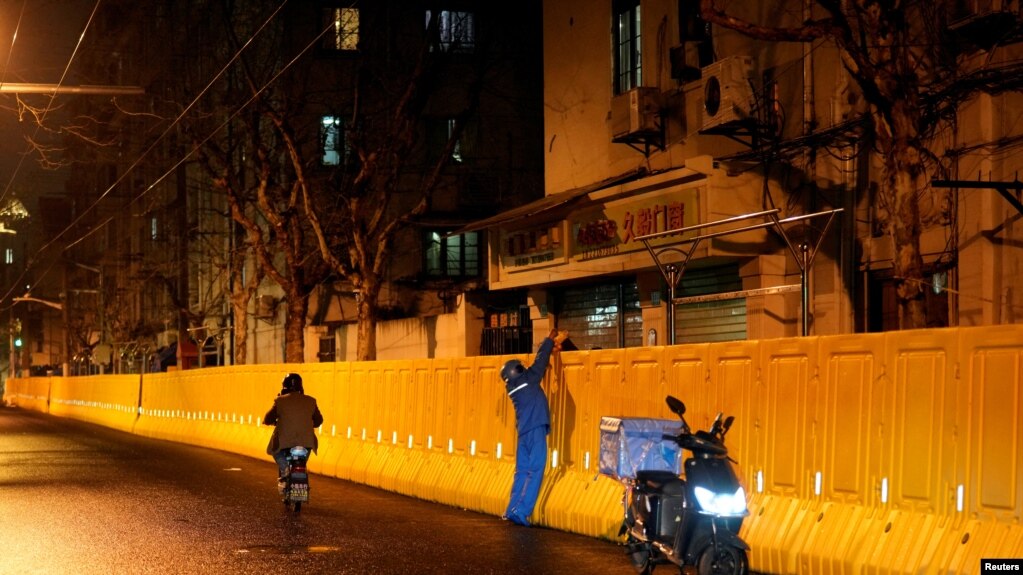
In order to control the epidemic, the Chinese authorities continued to adopt the zero-clearing policy, and implemented regional control or global closure of the severely affected areas. The 26 million residents of Shanghai, China's economic capital, are stuck at home due to the lockdown. One of the difficulties they encountered in life was a severe lack of necessities. Many residents complained that they could not buy vegetables and food.
According to a report by the US financial media Bloomberg on Thursday, it is not only ordinary people who lack basic food, but even the rich face the same problem. Xu Xin, founder of the venture capital firm "Today's Capital Group", a well-known venture capitalist trapped in Shanghai, recently sought help through the community WeChat group, hoping that someone could help her buy bread and milk. Xu Xin is known in China as the "investment queen", and Chinese media say she is worth as much as 26 billion yuan.
The shutdown of Shanghai, China's largest economic center, has caused troubles far beyond its citizens. The world is more concerned that China and global supply chains are being plunged into wider disarray as a result of China's draconian lockdown measures.
The New York Times reported on Friday that a growing number of Chinese cities are requiring truck drivers to be tested for the virus every day because of the need to prevent the spread of the virus, while those in high-risk areas are not allowed to work across regions. Being forced to quarantine, these practices have created a severe shortage of truck drivers, the parts needed by the factory cannot be delivered, and the goods cannot be transported from the factory to the port terminal in time.
The truck driver shortage is not only a problem in Shanghai, but also in nearby cities, including Kunshan, an electronics production hub between Shanghai and Suzhou, the report said. Many manufacturers of electronic components in Kunshan have closed their doors.
The New York Times quoted Julie Gerdeman, CEO of Everstream, a supply chain risk management company owned by DHL, a global express delivery company headquartered in San Marcos, California, as saying, “The main electronics used by Apple and Tesla are Product suppliers have factories there.”
During the lockdown, many Chinese companies took various measures to reduce losses. They arranged for employees to eat and live in the company, they put a mattress on the floor to sleep, and many of them lived like this for weeks. Businesses are storing goods in nearby warehouses, waiting for road closures to be lifted and trucking to return to normal.
However, the worsening of the epidemic has led to the extension of the closure of cities such as Shanghai, Changchun, and Shenyang. Many factories were unable to restock, raw materials and parts were used up, and production came to a standstill. They only allow workers to go home and wait for notice.
The New York Times said retailers and manufacturers in Western countries have adjusted in response to problems in China's supply chain, abandoning shipping and switching to air freight. As a result, air freight prices have more than doubled since last year. The outbreak of the Russian-Ukrainian war forced many airlines to change flight routes to avoid the war zone, which inevitably extended the flight distance and reduced the number of flights and the number of passengers carried on each flight.