In 2005, a patient of Israeli doctor Jacob Lavee went to China for a heart transplant on an exact date known two weeks earlier.
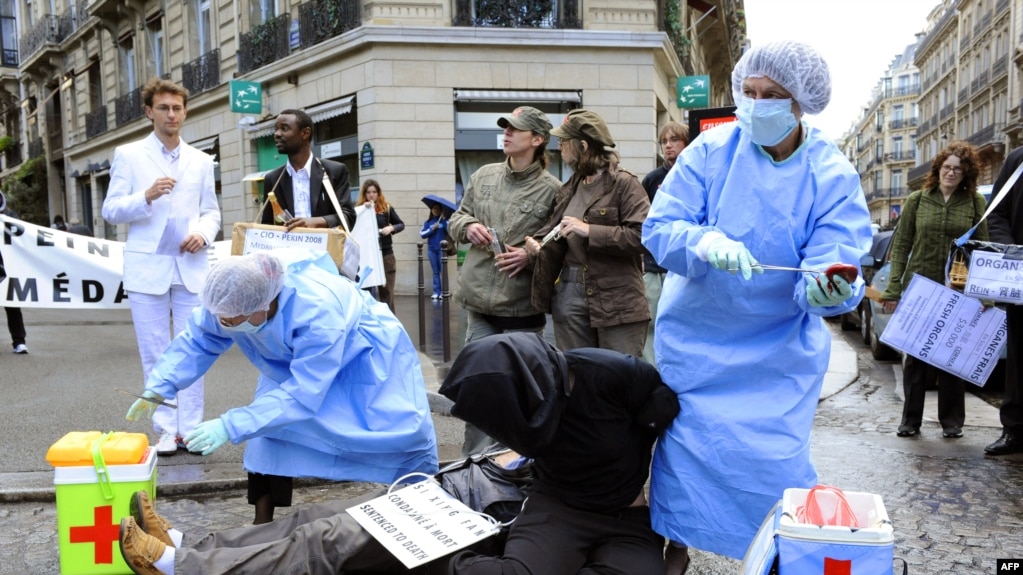
This shocked Dr. Ravi, "I said, who can guarantee you a heart transplant on an exact date?" US news site Axios reported Monday (April 4). Because it means "someone has to die on that exact day."
Ravi is Director of the Heart Transplant Unit at Sheba Medical Center, Tel Aviv University, Israel.
On Monday, he collaborated with Matthew Robertson, a PhD candidate in political science at the Australian National University and a Chinese researcher at the Victims of Communism Memorial Foundation, in the American Journal of Transplantation, an American medical journal. published a peer-reviewed study of organ transplants performed by healthcare workers in China without following standard medical procedures .
“The Dead Donor Rule (DDR) is the foundation of transplant ethics. The rule states that organ harvesting must not begin until the donor has died and is officially declared dead, and similarly, organ harvesting must not result in the donor death," the study said.
The two researchers collected evidence from 2,838 medical papers published in Chinese scientific journals related to transplants in China, and finally found evidence from 71 that the donors whose hearts or lungs had been removed were not correctly declared brain dead.
The report is limited to the study of donor heart and lung transplants in China. Because the procurement of these two organs often "requires a donor whose heart is still beating." The ethics of obtaining these organs requires the donor to be declared brain dead.
"Heart transplantation is the best case study," Robertson said at an April 7 discussion at the Memorial Fund for Victims of Communism. "The donor must be brain dead, but their heart is still beating. If the heart goes into sudden arrest, the transplant will not be possible." "Therefore, there needs to be more coordination between the security services that provide the body and the medical system."
"Organ procurement for transplantation can only begin after determination of brain death, otherwise the organ harvesting procedure itself becomes part of the execution," Dr. Ravi said. There are three medical criteria for determining brain death: the patient is in a coma, there are no brainstem reflexes, and "the most important thing is to perform an apnea test to determine whether the patient can breathe on his own."
Ravi said that this confirmation process takes "eight to 10 minutes, and we don't see a single breath," before it confirms that "the patient is diagnosed as brain dead. If breathing movement is observed, the opposite apnea test is considered negative. ... Therefore, a diagnosis of brain death cannot be supported."
An unnamed American doctor explained to VOA reporters that to confirm a patient is brain dead, not only must the brain waves flatten out, but the signatures of three neurologists are required.
But, in the 71 cases the study found, "we didn't know what caused the donor brain damage," Ravi said. "Testing for brain death is not done before their organ harvesting surgery." Rather, "in most of these cases, the patient is put on a ventilator and the organ harvesting begins before brain death has been declared. surgery."
Inferring procurement of organs as cause of death of donors
Fragments taken from 71 Chinese medical papers have these records, "Respiration is maintained with anesthetics after brain death"; "Artificial respiration is established rapidly after death"; "Death donors who have lost spontaneous breathing should be established as quickly as possible under specific conditions. Assisted breathing to support circulation, maintain the blood oxygen supply of the donor heart, avoid or shorten the ischemia time of the heart, and at the same time quickly open the chest to take the heart"; "After the donor brain dies, the first step is to establish respiratory and venous channels."
These excerpts do not contain any description of the confirmation of brain death, but merely an empirical introduction to the emergency measures of oxygen supply taken to ensure that the organ can be effectively transplanted.
"So we reasoned that if the prisoner was intubated immediately after being declared brain dead or prior to organ harvesting surgery, then the prisoner may not have been brain dead, more that brain death has not been determined," Robertson noted. "Then the procurement of hearts was the cause of death. Presumably, paramedics were carrying out the execution, and we know these are prisoners given the official Chinese statement."
Voice of America sent a request for comment to the American Journal of Transplantation, which published the report, to learn about the journal's decision to publish and review the report, but no reply was received as of press time.
Teng Biao, a visiting scholar at the University of Chicago and director of China Against the Death Penalty, said it was the first time someone had "used such a rigorous academic paper approach," pointing out that "relevant Chinese medical staff were involved in the organ harvesting process. in," Teng Biao said.
Teng Biao said at the forum of the Memorial Fund for Victims of Communism that in China, as a special group, it is more difficult to guarantee the human rights of death row prisoners. "Whether from the perspective of the government or the people, it is considered that a serious crime has been committed, and not killing is not enough to cause public anger. Under this concept, most people probably will not treat this issue as a serious problem," he said. Teng Biao said. "Whether or not to officially declare brain death is the same in many people's ideas, and it will not be regarded as a serious issue." He added.
The 71 reports examined in this paper were all published between 1980 and 2015 and involved a total of 56 hospitals in China, 12 of which were military or paramilitary hospitals, in 15 provinces and 33 cities in China.
So does this kind of organ harvesting, which violates the rules of deceased donors, continue today? The report's author, Robertson, said they couldn't find any similar reports after 2015.
Things got better after 2015 ?
Teng Biao believes: "The main reason is that the Chinese government announced that starting from January 1, 2015, the use of organs from executed prisoners will be completely stopped, so relevant papers have disappeared."
On the bright side, Robertson argues, "the reform package does stop the use of prisoners (organs), and therefore these abuses." Another possibility is that "grassroots human rights activists and researchers have Violations of dead donor rules were revealed in September 2009, while Chinese officials focus on international perceptions.”
Robertson should be referring to the independent investigative report "Inquiry into the Allegation of the CCP Harvesting Falun Gong Practitioners' Organs" published by former Canadian Asia Pacific Director David Kilgour and Canadian human rights lawyer David Matas. Report".
However, "in fact, China has not stopped using the organs of executed prisoners for transplantation." Teng Biao said. "According to Huang Jiefu, the former Chinese Vice Minister of Health, he said that executed prisoners are also citizens, if they donate their organs voluntarily as citizens, of course, it is OK, so to say that an organ transplant from a executed prisoner turns it into a voluntary organ donation of citizens, so It doesn't involve the issue of death row prisoners, so I think this is just a change in the narrative, and this practice of taking organs from death row prisoners for transplantation has not stopped."
Chinese state media Global Times reported in 2017 that Huang Jiefu, then chairman of the China Human Organ Donation and Transplantation Committee, did not deny that China was using organs from executed prisoners. He accused Falun Gong of "confounding 'use of organs from executed prisoners' with 'organ harvesting from live'." He said they "don't care whether China is using organs from executed prisoners or not, and they don't care that millions of patients with organ failure need to be saved, and they just want to transplant Chinese organs. The field is politicized and demonized.”
In January last year, the Red Cross Society of China and the National Health Commission of China formulated the "Administrative Measures for the Registration of Human Organ Donation", in which Chapter 1, Article 3 mentioned that "Human organ donation follows the principle of 'voluntary and free'."
In March of the same year, China’s official Xinhua News Agency reported in a report on a national human organ donation commemoration event organized by the Red Cross Society of China, “The number of voluntary registrations for organ donation in China has exceeded 3.15 million. More than 33,000 cases of organ donation and more than 99,000 organs have been donated, successfully saving the lives of nearly 100,000 patients with organ failure."
The Ravi and Robertson study reported that China is considered the second-largest transplant country in the world, after the United States. But human rights researchers believe that China has even more transplants than the United States.
The report said, “Chinese hospitals continue to advertise transplant wait times as weeks, compared with months and years in the U.S. Hospitals continue to advertise organ transplant tourists through English, Russian and Arabic websites. Chinese authorities now say that to In 2023, they will perform 50,000 transplants - all allegedly from voluntary donors."
The source of organ transplants in China may forever remain a mystery, Teng Biao said. "Chinese officials not only regard organ transplantation as a very sensitive issue, but also all statistics on death row prisoners are a state secret. No one knows how many death row prisoners China has every year and how many are executed."